
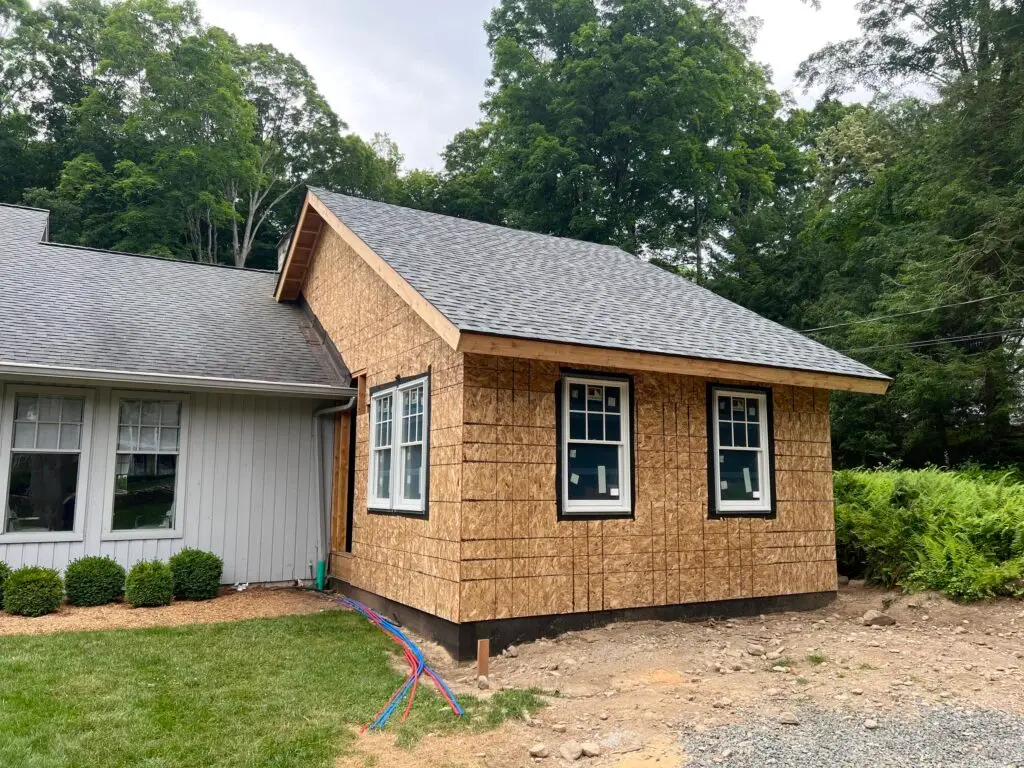
Your family needs more space, but your home isn’t getting any bigger.
Maybe the kitchen feels cramped, you’ve run out of bedrooms, you need a dedicated home office, or your family simply doesn’t fit the house the way it once did. Eventually, many homeowners reach the same question:
Should we renovate and build an addition, or should we move to a bigger house?
There isn’t one answer that’s right for everyone. Moving may make sense if your current property can no longer meet your needs. But if you like your home, property, and neighbourhood, a well-planned addition can give you the extra space you need without starting over somewhere else.
Before putting up a For Sale sign, it is worth comparing what both options actually involve.
Start With Why You Need More Space
Before comparing costs, think about what’s actually wrong with your current home.
Do you need:
- Another bedroom?
- A larger kitchen?
- An additional bathroom?
- A home office?
- A primary bedroom suite?
- More room for children?
- Space for aging parents?
- A larger family or living room?
- Better storage?
- A more functional main floor?
The answer can tell you a lot about whether moving is necessary.
If your home is simply missing one important space, moving may be a drastic solution to a problem that a home addition could solve.
On the other hand, if you need a completely different property, substantially more land, a different location, and a much larger house, moving may make more sense.
Do You Like Where You Live?
This should be one of the biggest factors in the decision.
A house can be renovated. Its location can’t.
Think about everything you’d be leaving behind if you moved:
- Your neighbourhood
- Your neighbours
- Your children’s school
- Your commute
- Nearby family and friends
- Local parks and amenities
- Your yard
- Your community
If you’ve spent years finding a neighbourhood you enjoy, moving solely because you’re short on space may not be your first choice.
This is especially true when homes that meet your new space requirements aren’t readily available in the same area.
Building an addition allows you to solve the space problem while keeping everything you already like about your location.
How Much More Space Do You Actually Need?
There’s an important difference between needing more space and needing a different house.
Suppose your family needs one additional bedroom and another bathroom. A targeted addition could solve both problems.
If you need a bigger kitchen and more room for entertaining, a rear addition could expand your main living area.
If you’ve outgrown a bungalow but don’t want to give up your property, a second-storey addition could potentially add several bedrooms and bathrooms without taking away much of the backyard.
Before deciding to move, identify approximately how much additional square footage would make your existing home work.
You may find that the gap between what you have and what you need isn’t as large as you thought.
What Kind of Addition Could Solve the Problem?
Home additions can take many different forms.
Rear Addition
A rear addition extends the house into the backyard and is particularly useful for expanding kitchens, dining rooms, family rooms, and other main-floor living spaces.
It can also provide room for a main-floor bedroom, bathroom, office, or primary suite.
Side Addition
If your property has enough available space, expanding from the side of the home may provide additional living area without significantly affecting the backyard.
Second-Storey Addition
Building upward can create substantial square footage while preserving your property’s existing footprint.
This can be particularly useful for bungalow owners or families who need several additional bedrooms and bathrooms.
Addition Above a Garage
Depending on the existing structure, the space above an attached garage may provide an opportunity for a bedroom, office, guest suite, or other living area.
The right home addition depends on your property and what you’re trying to accomplish. In some cases, there may be more ways to expand your current home than you initially realized.
Compare the Cost of an Addition With the Real Cost of Moving
It’s tempting to compare the construction cost of an addition directly with the price of another house.
That doesn’t tell the whole story.
Moving can involve expenses beyond the purchase price of your new home.
Depending on your situation, costs can include:
- Real estate commissions
- Legal fees
- Land transfer tax
- Moving expenses
- Mortgage-related costs
- Inspections
- Repairs before selling
- Immediate repairs to the new home
- New furniture or appliances
- Renovations after moving
There’s also the difference between the value of your existing home and the price of the larger property you want to buy.
If you’re moving specifically because you need substantially more space, there’s a good chance the next property will cost more.
An addition requires a significant investment as well, but that money is being put directly into improving a property you already own.
How Much Does a Home Addition Cost?
There isn’t one standard price for an addition.
The cost depends on factors such as:
- Size
- Type of addition
- Foundation requirements
- Structural changes
- Number of bathrooms
- Plumbing
- Electrical work
- HVAC
- Roofing
- Windows
- Exterior materials
- Interior finishes
- Site conditions
Larger additions and second-storey projects generally require a significantly larger investment than a small single-room expansion.
Instead of deciding based on assumptions, get a realistic idea of what the addition you actually need would cost.
You can then compare that number with the financial impact of buying a larger home.
Consider the Housing Market
The local housing market can also influence your decision.
If homes that meet your needs are difficult to find in the communities where you want to live, moving becomes more complicated.
You may find a larger home but discover that it needs significant renovations anyway.
That’s an important consideration.
If you buy another house for more space but immediately need to replace the kitchen, renovate bathrooms, finish the basement, or change the layout, your actual investment may be considerably higher than the purchase price suggests.
Before moving, look at what’s genuinely available within your budget rather than imagining the perfect replacement home.
Think About What You Already Have
It’s easy to focus on everything your current home is missing and overlook what it already gets right.
Maybe you’ve already:
- Renovated the kitchen
- Finished the basement
- Replaced the roof
- Installed new windows
- Updated the HVAC system
- Built a patio or deck
- Landscaped the property
- Renovated bathrooms
- Customized the home to your tastes
Moving means leaving those investments behind.
You may also end up purchasing a home where some of the same projects need to be done again.
If the majority of your existing home works well and you’re primarily struggling with square footage, expanding it can allow you to build on the improvements you’ve already made.
Will an Addition Work With Your Property?
Of course, wanting an addition doesn’t necessarily mean every type of addition is possible.
Your property needs to be evaluated first.
Factors can include:
- Lot size
- Property setbacks
- Lot coverage
- Building height restrictions
- Existing foundation
- Structural condition
- Utility locations
- Grading
- Access to the construction area
- Local zoning requirements
If you want to build outward, your lot needs enough available space.
If you want to build upward, the existing structure needs to be evaluated to determine what structural work may be necessary.
This is why talking with an experienced home addition contractor early in the decision-making process can be useful. Before comparing renovation with moving, you need to know what’s realistically possible with the property you already have.
Would an Addition Fix the Layout Too?
Sometimes square footage isn’t actually the main problem.
A house can be reasonably large and still feel cramped because the layout doesn’t work.
Older homes may have:
- Small kitchens
- Closed-off dining rooms
- Underused formal rooms
- Poor storage
- Awkward hallways
- Limited connections to the backyard
In these situations, an addition can be combined with changes to the existing floor plan.
For example, a rear addition could expand the kitchen while allowing walls within the existing home to be reconfigured. Instead of simply attaching another room, the project could create a much more functional kitchen, dining, and living area.
That may solve problems that purchasing a slightly larger house wouldn’t necessarily address.
Think About Your Needs 10 Years From Now
Don’t make the decision based only on what your family needs today.
Think about where you’ll be five, ten, or even twenty years from now.
Will you have more children?
Will older children eventually leave home?
Will aging parents live with you?
Will you continue working from home?
Do you want to remain in the house after retirement?
Would main-floor living eventually become important?
If you’re planning to stay long term, an addition can be designed around those future needs.
For example, a main-floor addition could create a primary suite that becomes increasingly useful as you get older. A second storey could give a growing family the bedrooms they need now while allowing the first floor to remain focused on shared living space.
Good planning should solve tomorrow’s problems as well as today’s.
How Much Disruption Are You Comfortable With?
This is one category where moving may sound appealing.
Home additions are construction projects, and construction creates disruption.
Depending on the scope, you may deal with noise, dust, restricted areas of the home, contractors coming and going, and temporary changes to your normal routine.
Major projects can last several months.
In some cases, particularly extensive second-storey additions, temporarily moving out may be the most practical solution during certain stages.
However, moving has its own disruption.
You need to prepare the existing home for sale, attend showings, search for another property, negotiate a purchase, pack everything you own, physically move, unpack, and adjust to a new house and neighbourhood.
The question isn’t necessarily which option is disruptive. It’s which type of disruption makes more sense for the result you want.
What About the Value of the Addition?
A well-designed addition can increase the value of your property by adding usable living space and improving functionality.
Bedrooms, bathrooms, expanded kitchens, family rooms, and primary suites can all make a home more appealing.
But you shouldn’t evaluate an addition solely based on whether you’ll recover every dollar when the house is sold.
If you plan to live there for another 10 or 20 years, you’re also receiving years of use from the additional space.
A larger kitchen your family uses every day has value.
So does an extra bedroom that means your children no longer have to share, an office that allows you to work comfortably from home, or a main-floor suite that allows a parent to live with you.
Financial return matters, but so does the improvement to everyday life.
When Does Building an Addition Make More Sense?
An addition may be the better choice when:
- You love your neighbourhood
- Your property has room to expand
- You only need a specific amount of additional space
- Most of your existing house already works well
- You have invested significantly in your current property
- Homes that meet your needs are difficult to find nearby
- You want to customize the new space
- You plan to remain in the home for many years
In these situations, moving can mean giving up a lot simply to gain additional square footage.
When Does Moving Make More Sense?
There are also situations where renovating isn’t the right answer.
Moving may make more sense if:
- You want to live in a different city or neighbourhood
- You need significantly more land
- The property can’t accommodate the addition you need
- The existing home has major problems beyond a lack of space
- You need substantially more square footage than an addition can reasonably provide
- The location no longer works for your family
- You don’t want to undertake a major construction project
An addition can transform a house, but it can’t change every aspect of the property.
If the things you dislike most can’t be fixed through construction, moving may be the better long-term decision.
Addition vs. Moving: Questions to Ask Yourself
If you’re still undecided, sit down and answer a few questions:
- What exactly don’t we like about our current home?
- How much additional space do we need?
- Do we want to stay in this neighbourhood?
- Could an addition solve our biggest problems?
- What would the addition realistically cost?
- What would a suitable replacement home cost?
- Would that replacement home need renovations?
- What moving expenses would we incur?
- How long do we plan to stay in our next home?
- Which option would give us the home we actually want?
Once you start answering those questions with real numbers and realistic options, the decision often becomes much clearer.
Before You Move, Find Out What’s Possible
If you’ve outgrown your home, don’t assume moving is your only option.
The house you already own may have more potential than you realize.
A rear extension could transform the main floor. A second storey could add multiple bedrooms and bathrooms. Another type of home addition could provide exactly the extra space your family needs without requiring you to leave the property and community you’ve already made your own.
Little Rainy Construction works with homeowners throughout Brantford and surrounding Ontario communities to plan and build additions around their homes, properties, and long-term needs.
Before deciding whether to renovate or move, find out what can realistically be done with your existing home. Once you understand the possibilities, costs, and scope of an addition, you’ll be in a much better position to decide whether expanding or starting somewhere new makes the most sense for your family. Use our Price Estimator Tool to get a free quote for your project.